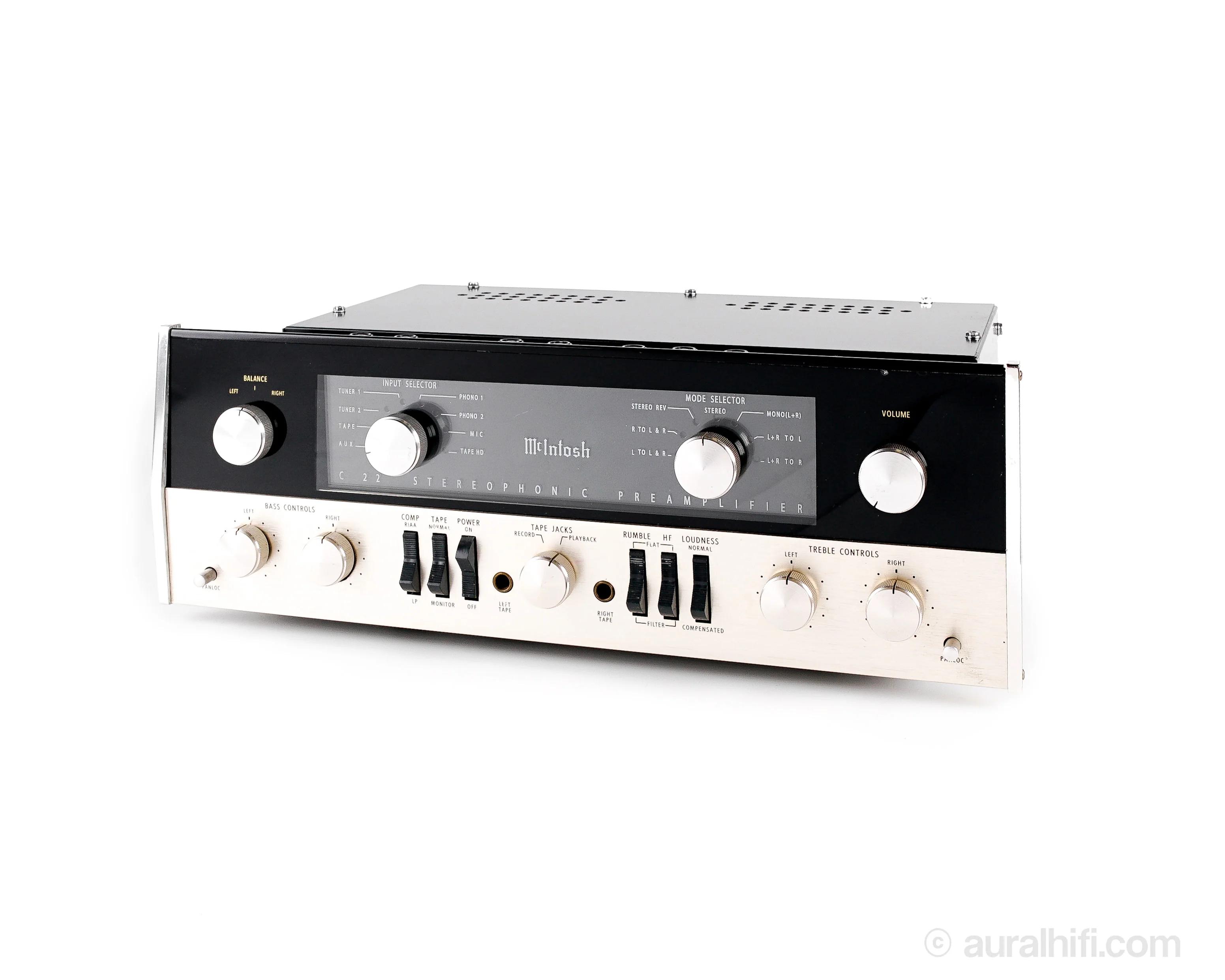
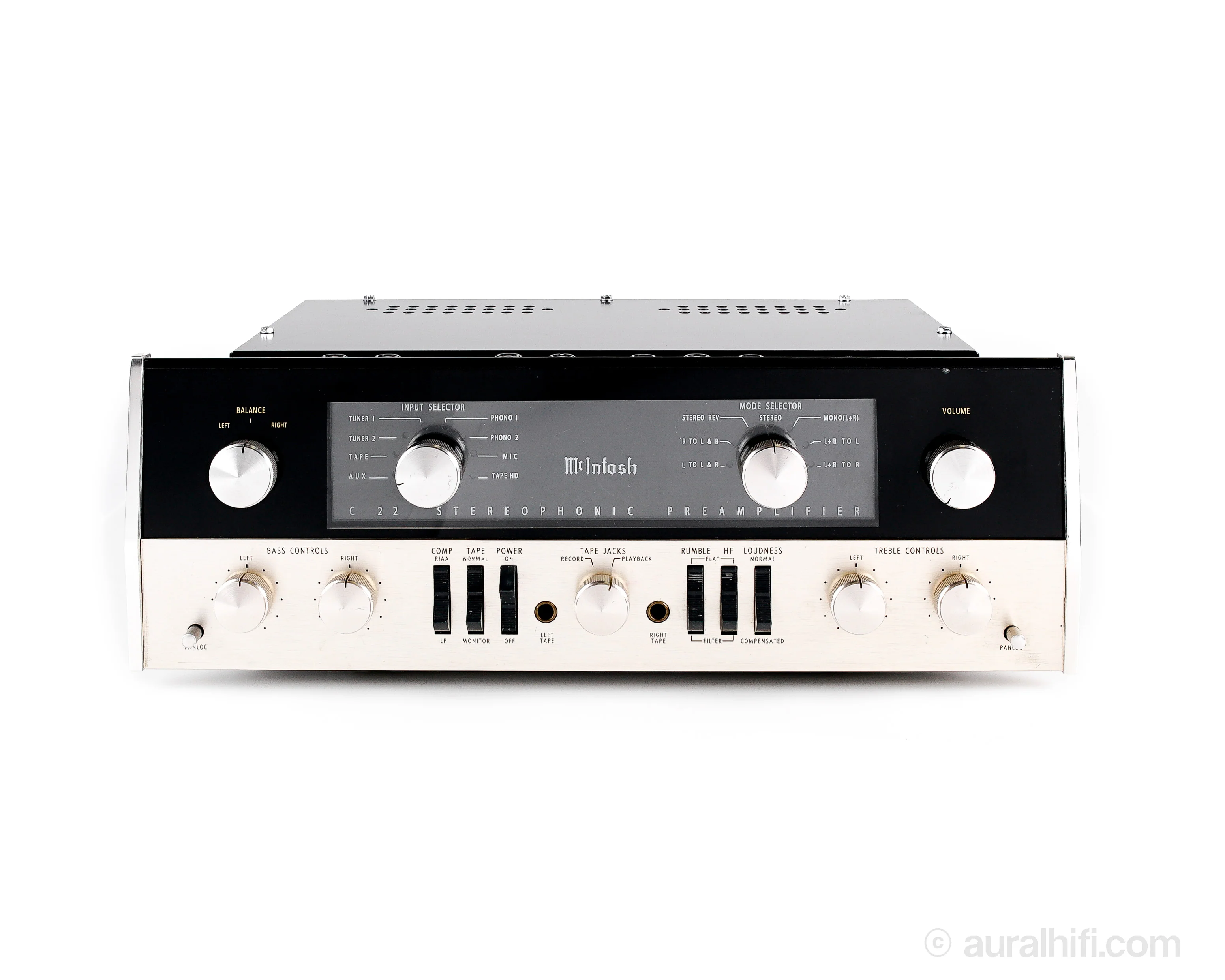
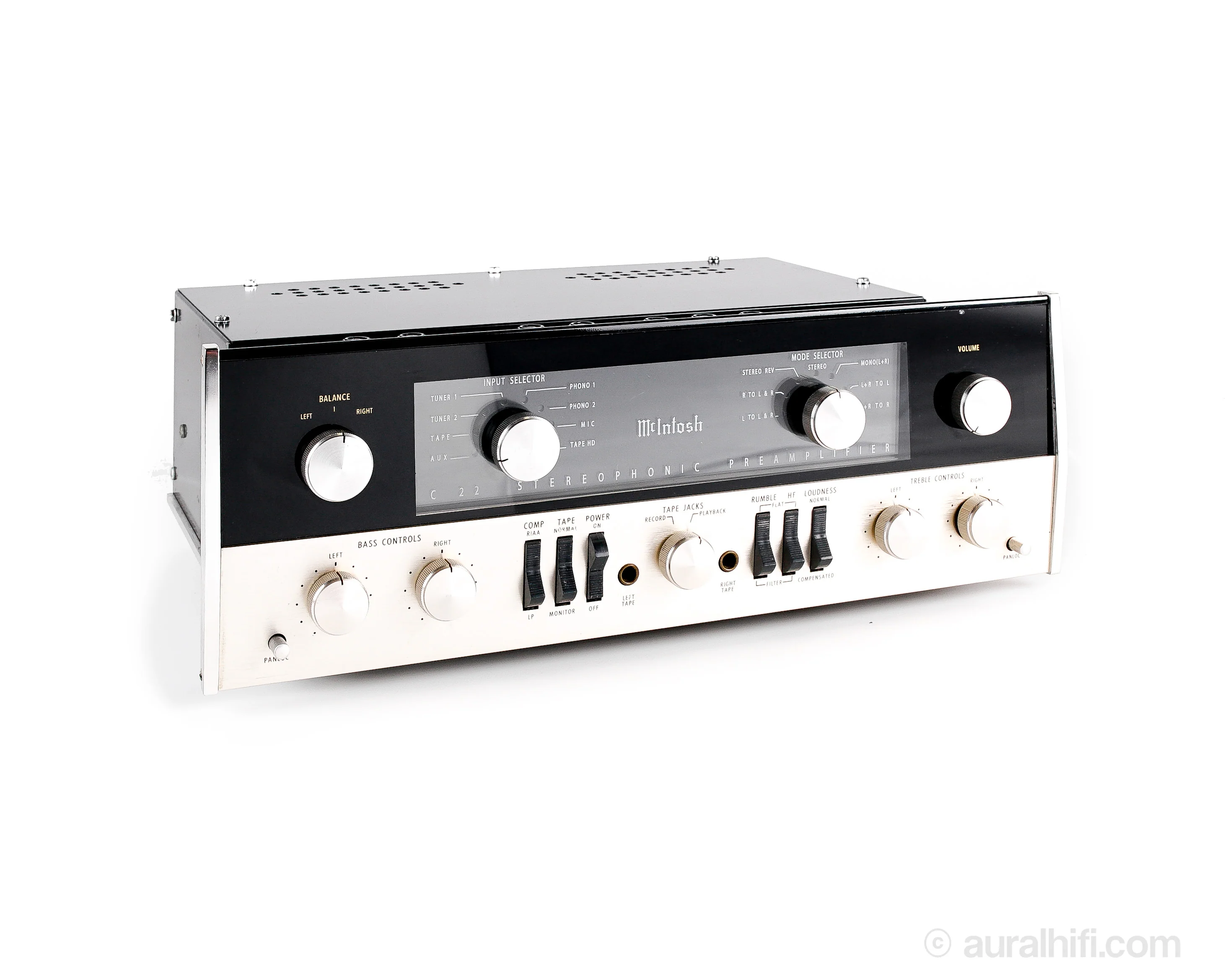
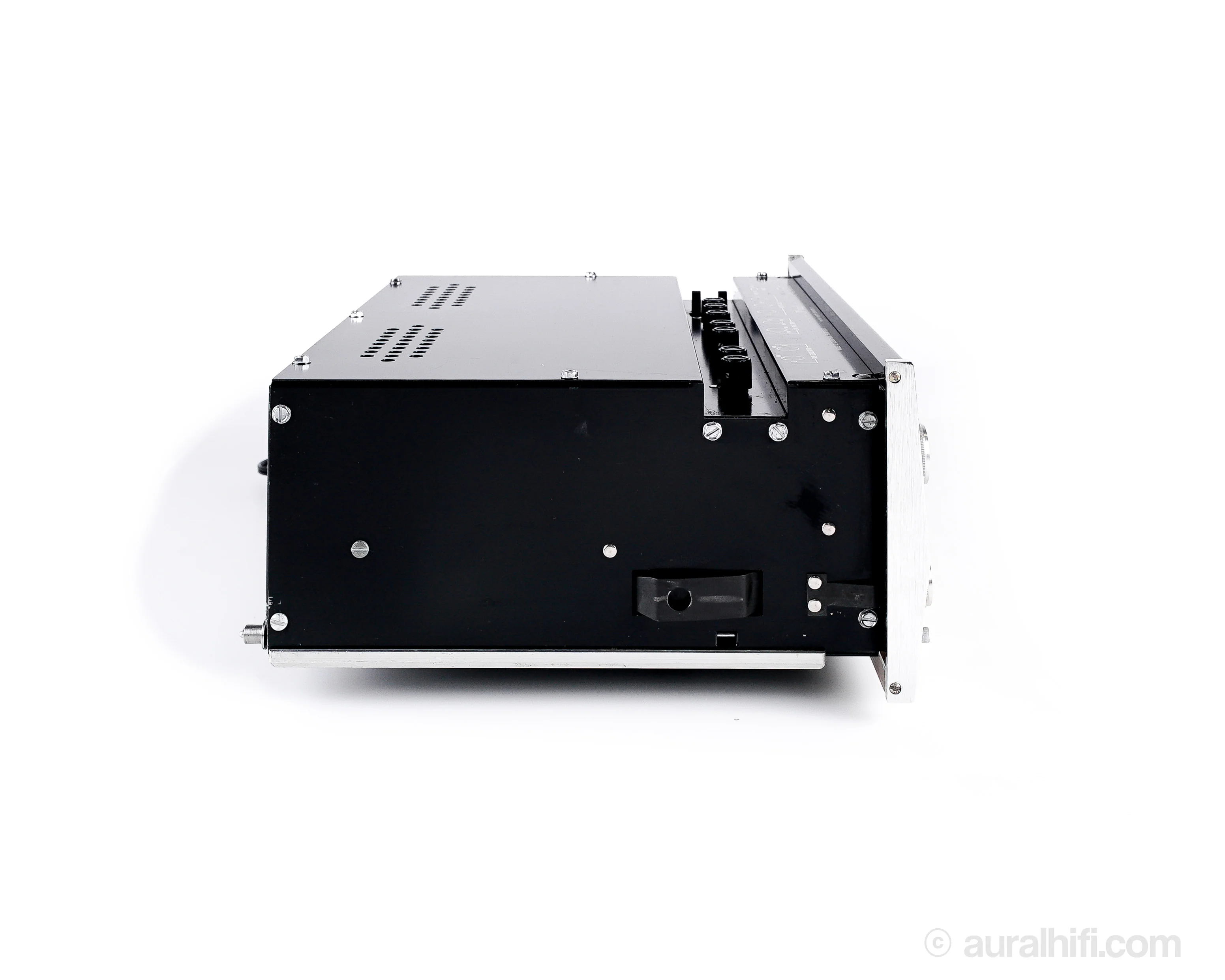
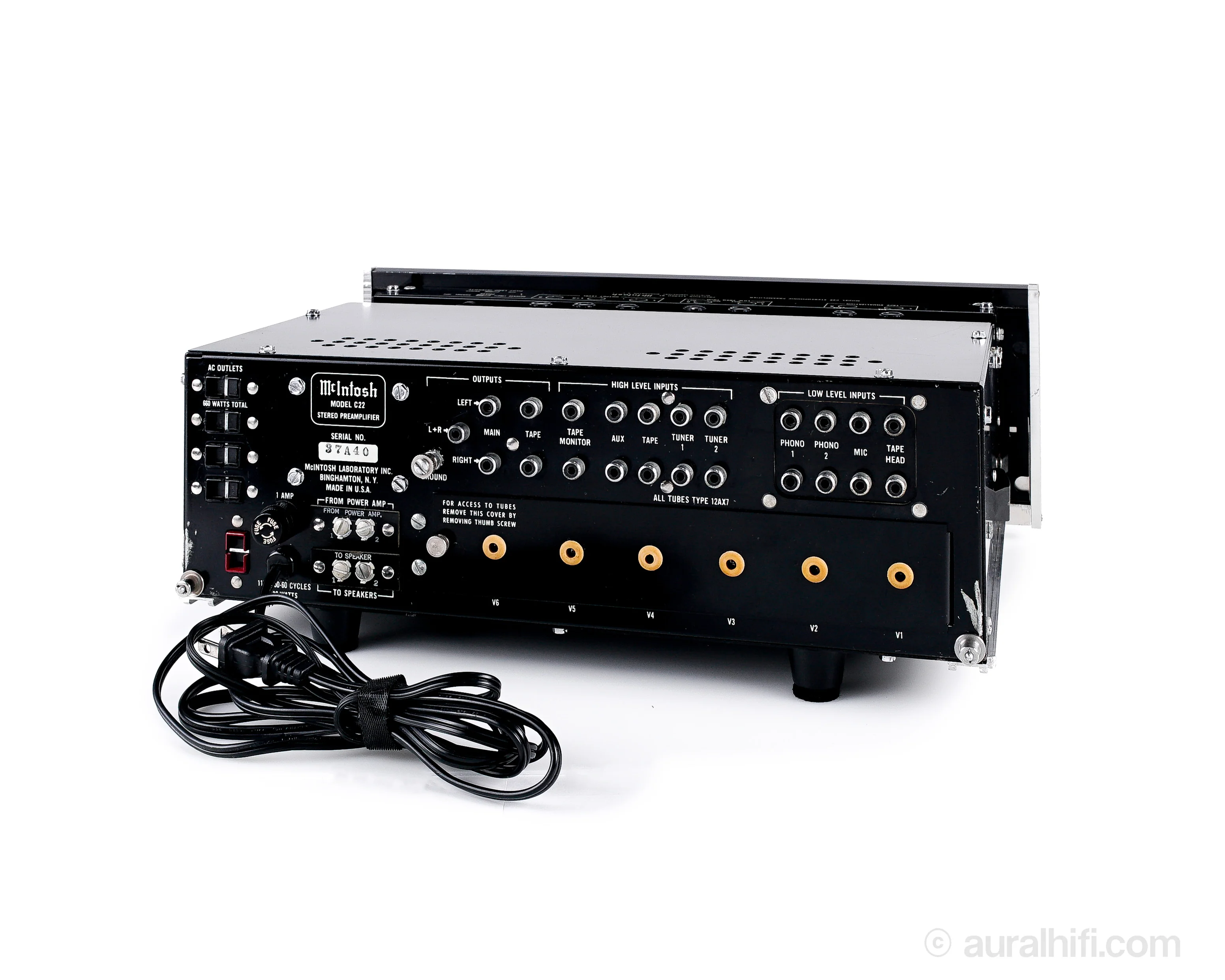
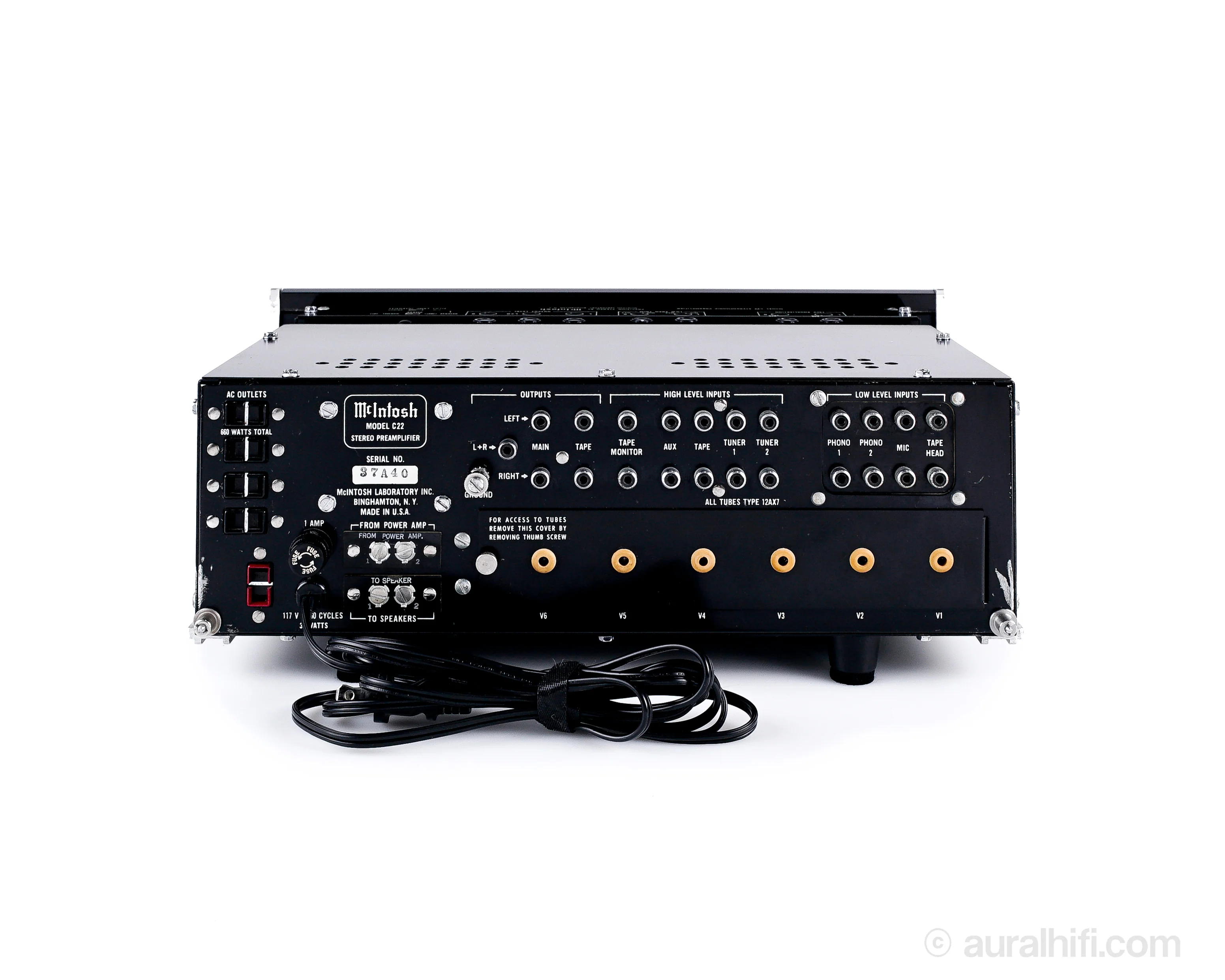
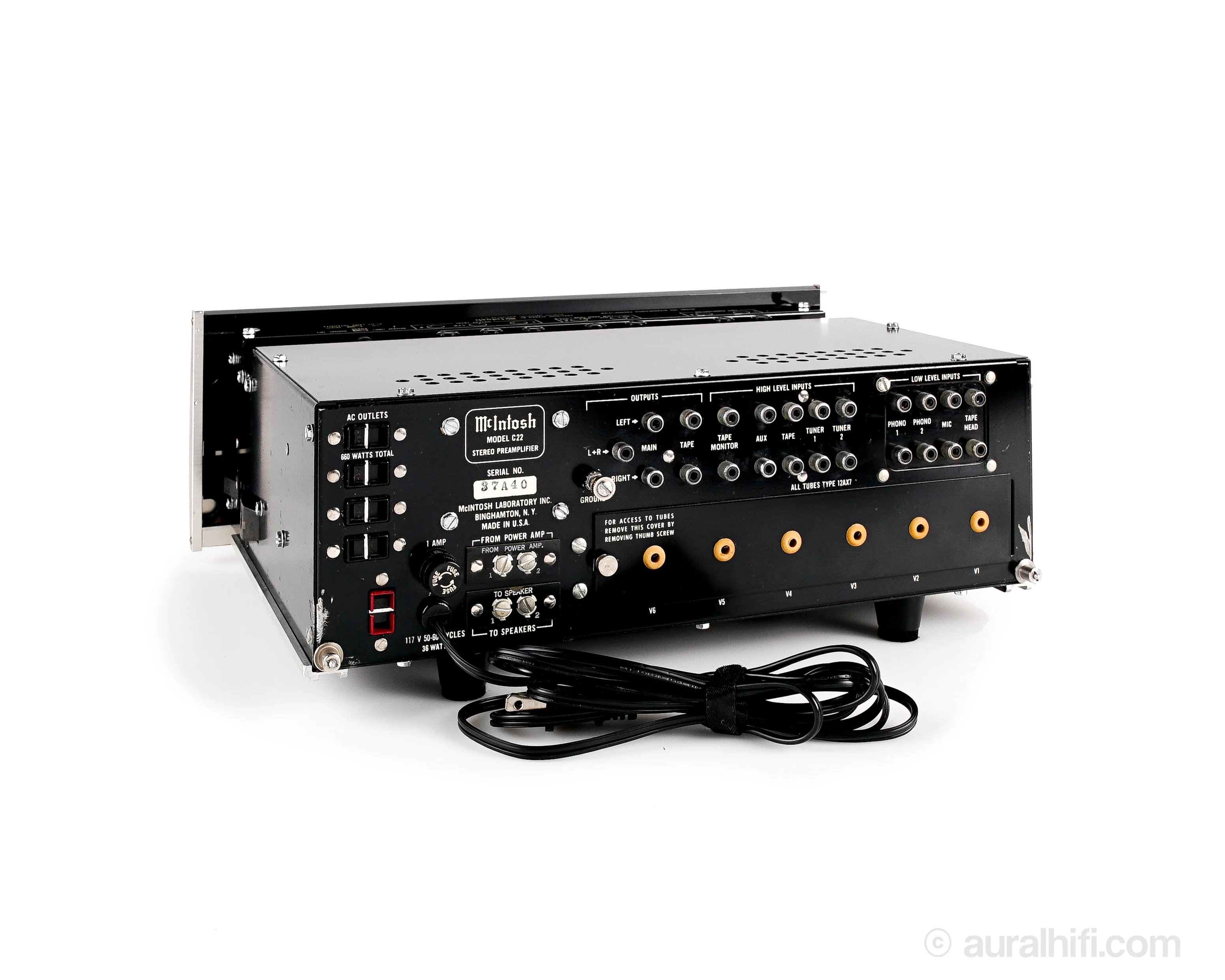
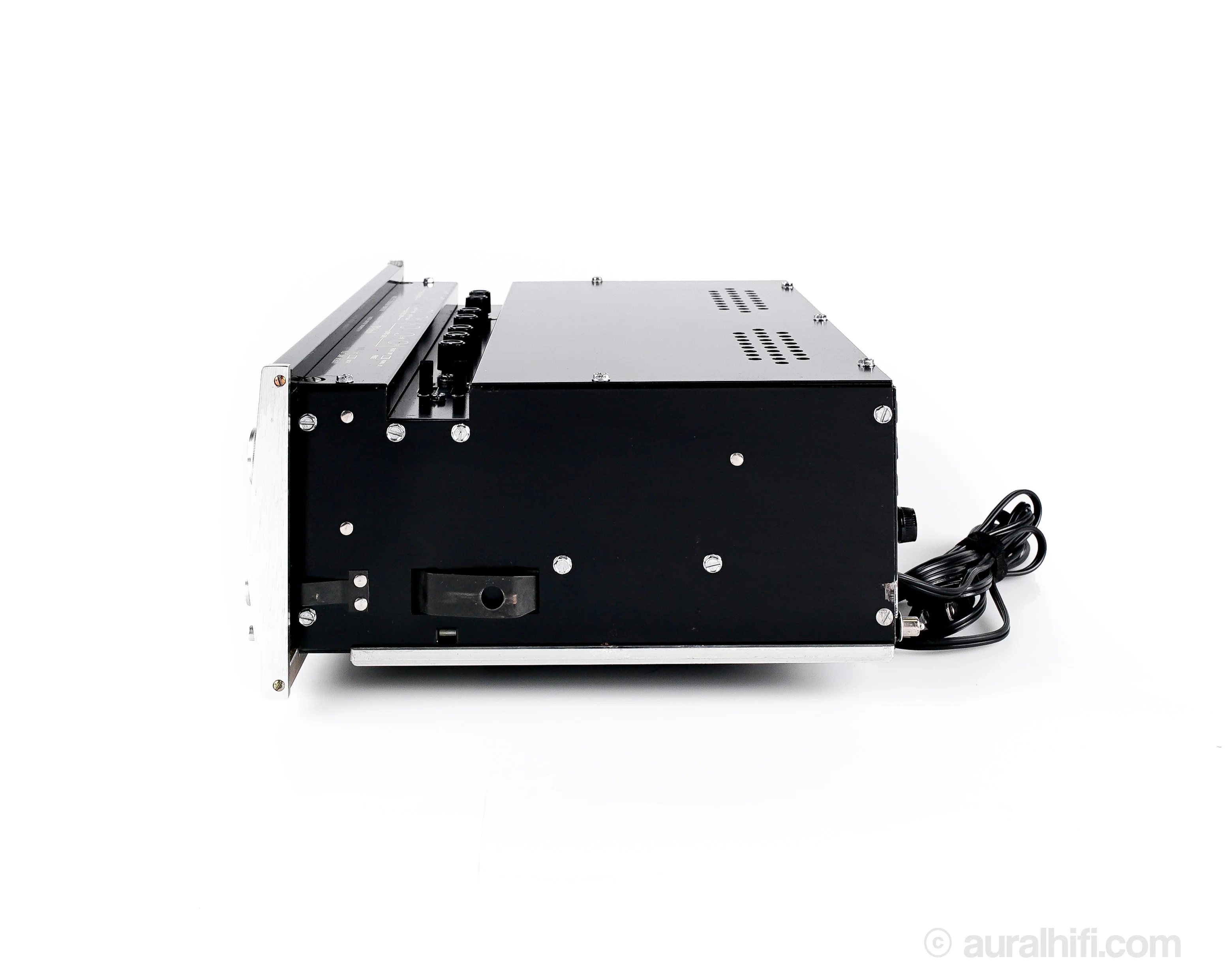
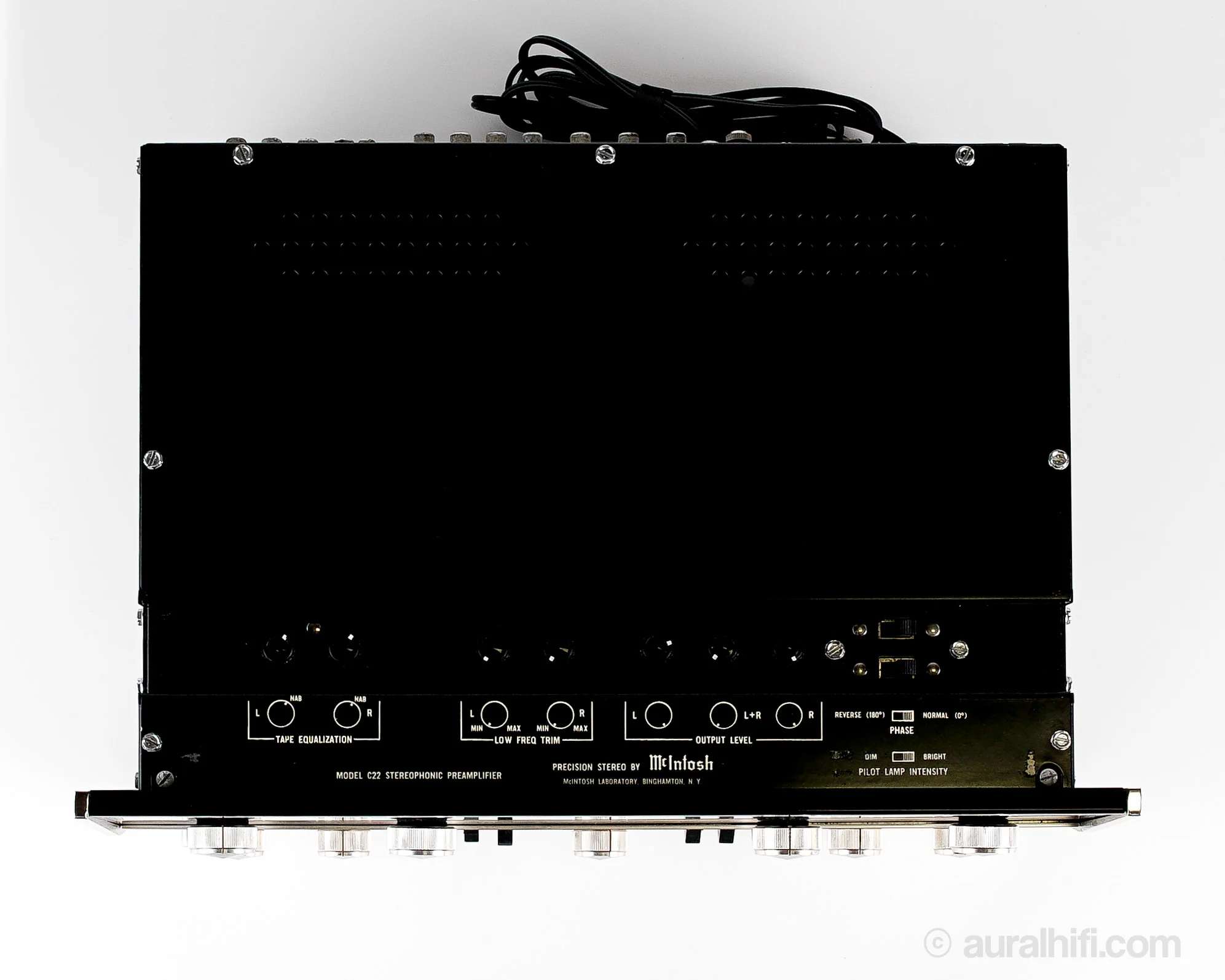
If you know, you know. And if you don't, the original C22 is the holy grail of McIntosh preamps. This example, circa 1967, is perhaps the finest rebuild we've done. Aside from a tiny chip above the volume knob, this piece is a superb example of HiFi history.
- RESTORATIONS
-
- Full 30-point service check
- Selenium rectifier replaced with modern diodes
- Rebuilt power supply
- Recapped the entire signal path with Mundorf Supreme and Jupiter Astron capacitors
- Cleaned controls, switches, and chassis
- SPECS
-
Type Tube Preamplifier
Response 20-20kHz (+0.5 -0.5dB)
Distortion 0.02%
Noise and hum -85dB high level
Output rated 2.5v, 10v max
Input sensitivity and impedance aux 0.25V at 250k, phono 2mV at 47k
Center channel out 1.0v with control (L+R)
Individual tone controls bass and treble +20dB to -20dB
Rumble filter 50Hz at 12dB/octave
HF filter 5kHz at 12dB/octave
Low frequency trim controls 6dB of boost below 100Hz
Voltage gain 20dB aux, 62dB phono
Tube Complement 6x 12AX7
Cabinet L11, also fits L12, L52, and L62
Dimensions 5.44"H x 16"W x 13"D
Weight 16 lbs.
- LINER NOTES
-
Before (or perhaps even in spite of) the outstanding solid-state designs of the late 1990s, many ardent McIntosh supporters consider the C22 to be the brand's best preamplifier. It would be challenging to think of one with a more practical selection of settings, features, and functions. There are controls for bass, treble, balance, volume, and even a loudness circuit. There are two tape inputs with full monitoring and seven high-level inputs in total. One set of phono inputs is for moving-coil, the other is for moving-magnet, and the front panel gives users an option between capacitance and loading for mcs and mms. A mode knob allows you to switch between stereo, mono, stereo reverse, left and right to both channels, and mono to both channels.